What We Know About The Penn State Cocaine-Trafficking Ring
Here’s What We Know About The Penn State Frat Brothers’ Cocaine-Trafficking Ring
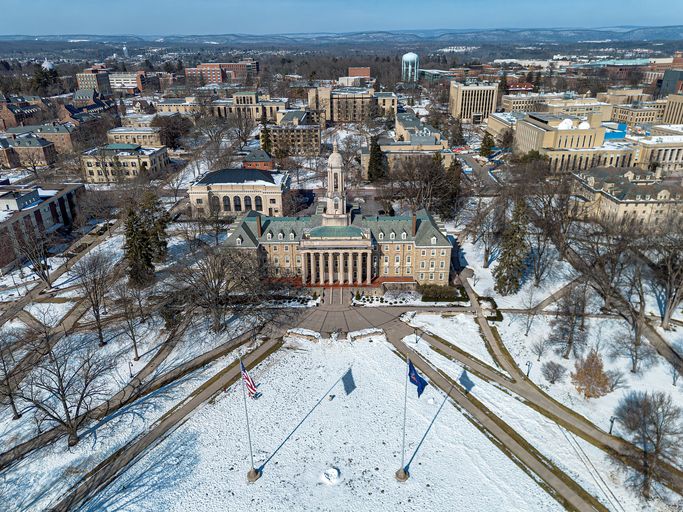
A major alleged cocaine-trafficking operation tied to two Penn State fraternities has resulted in criminal charges against 14 people, including current and former students. Pennsylvania Attorney General Dave Sunday announced the charges on August 17 following an investigation by State College Police and the 54th Statewide Investigating Grand Jury. According to prosecutors, the operation was active during 2023 and 2024 and revolved around members of the Delta Upsilon and Sigma Chi fraternities. Thirteen of the defendants were Penn State students at or around the time of the alleged activity, while the 14th is the father of one of those students. At least four of the people charged are still enrolled at Penn State.
Investigators say Agostino Abbatiello and Thomas Robinson sat near the top of the alleged operation and served as its main cocaine suppliers. Prosecutors allege the two routinely traveled to Philadelphia and New York to purchase large quantities of cocaine before bringing it back to State College. According to criminal complaints obtained by The Philadelphia Inquirer, Robinson told police after his arrest that he purchased cocaine from Abbatiello, sometimes buying as much as a kilogram for approximately $22,000. Investigators eventually came to view Abbatiello as one of the largest cocaine suppliers serving Penn State students.
Once the cocaine reached State College, authorities say it was cut and packaged primarily inside the off-campus Delta Upsilon and Sigma Chi fraternity houses before being distributed mainly to Penn State students. Prosecutors say fraternity brothers, and in some instances fraternity pledges, participated in preparing the drugs. Sunday said investigators uncovered evidence that cutting and bagging cocaine was allegedly used as a form of “indoctrination” for some pledges joining the fraternities, adding another potential hazing element to an already serious criminal investigation. Authorities emphasized that they have not uncovered evidence that the drugs were actually packaged on Penn State’s university-owned campus.
The investigation reportedly began in September 2024, with State College Police using multiple investigative methods to follow where the cocaine was coming from, how it was being packaged and who was selling it. According to prosecutors, transactions were often handled through cash and payment apps, while investigators also used informants to make controlled drug purchases during the probe. The case ultimately developed into what Sunday described as an “upper level trafficking organization” for the region rather than a handful of college students casually selling drugs to friends.
Abbatiello, Robinson, Mohammed Hurabi and Lars Zeepvat now face some of the most serious allegations, including felony corrupt organizations, conspiracy, dealing in proceeds of unlawful activity and related offenses. Robert Zanolla is charged with felony conspiracy, criminal use of a communication facility and additional misdemeanor offenses. Eight others — Liam Smith, Michael Brogno, Kaden Howe, Connor Hurleigh, Seth Beardsley, Kyle Ridpath, Daniel Price and Charles Wiseman — face misdemeanor possession and drug-paraphernalia charges. The charges vary by defendant, meaning prosecutors are not accusing all 14 people of playing the same role in the alleged operation.
The only defendant who was not a Penn State student during the alleged operation is Paul Robinson, Thomas Robinson’s father. Prosecutors accuse him of interfering with the investigation by taking steps to conceal evidence, including a safe that authorities say contained drugs and cash. He has been charged with felony tampering with evidence and hindering apprehension. Most of the defendants facing felony charges were arraigned shortly after the cases were announced, while the Pennsylvania Attorney General’s Drug Strike Force Section will handle the prosecutions. All of the charges remain allegations, and every defendant is innocent unless proven guilty.
Penn State has already begun taking action of its own. The university placed Delta Upsilon on interim suspension while its Office of Student Accountability and Conflict Response conducts an investigation, and current students charged in the case could also face disciplinary proceedings separate from the criminal cases. Meanwhile, Sigma Chi is not a recognized Penn State student organization and operates outside the university’s official oversight. Delta Upsilon’s international organization said members connected to the allegations have either been expelled, suspended or resigned. With the criminal cases only beginning, the investigation could provide an even clearer picture of just how large the alleged operation became and how deeply it was intertwined with fraternity life at Penn State.
RELATED: Michael Jordan’s Rare ‘Last Dance’ 1998 NBA Finals Jersey Could Fetch $15 Million