HBCU programs have long been crucial for developing talent in the NFL, despite uneven recruiting attention.
While HBCU players are less drafted today, they continue earning roster spots through special teams and developmental roles.
Source: Nick Cammett / Getty
Historically Black Colleges and Universities have always been about much more than what happens inside a classroom. For generations, HBCUs have produced civil rights leaders, doctors, lawyers, educators, entertainers, politicians, entrepreneurs and countless other professionals who have shaped Black history and American culture. These institutions were created when Black students were excluded from many predominantly white colleges, yet they still built environments where Black excellence could grow, thrive and eventually change the world.
That legacy extends deeply into sports, even though the athletic impact of HBCUs sometimes gets overlooked in today’s Power Four-dominated landscape. Long before major universities began seriously recruiting Black athletes, HBCU football programs provided them with an opportunity to receive an education, play the game and prove they belonged on its biggest stage.
The results speak for themselves. Walter Payton became one of the greatest running backs ever after attending Jackson State. Jerry Rice developed into the NFL’s all-time leader in receptions, receiving yards and receiving touchdowns after starring at Mississippi Valley State. Grambling State gave the league Willie Davis, Buck Buchanan, Willie Brown and Doug Williams, who became the first Black quarterback to start and win a Super Bowl. Alcorn State produced Steve McNair, while Texas Southern was the place Hall of Fame defensive end Michael Strahan made his name. We also can’t forget the pride and joy of Savannah State, Shannon Sharpe.
The path is rarely easy. Many current HBCU products entered the league as late-round picks, undrafted free agents or training camp tryout players who had to shine on special teams before earning larger roles. Their continued presence is proof that the talent remains available — even when the NFL scouts do not always give HBCU programs the attention they deserve.
Below are the current NFL players who spent at least part of their college football careers at an HBCU. The list reflects NFL training camp rosters as of today (August 6, 2026), meaning it includes players still competing for spots ahead of final roster cuts.
Brandon Codrington — Houston Texans
HBCU: North Carolina Central
Brandon Codrington entered the NFL as an undrafted free agent before earning recognition as an explosive return specialist. After beginning his career with the New York Jets and Buffalo Bills, the former North Carolina Central defensive back is now with the Houston Texans and continues trying to create opportunities through his speed and special teams value.
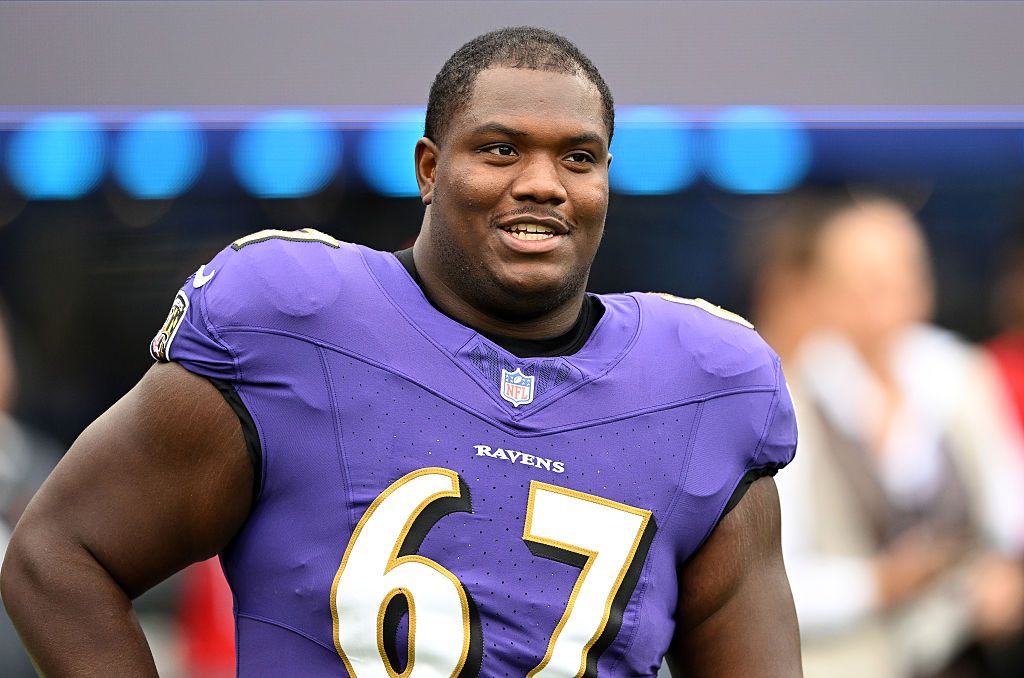
Carson Vinson — Baltimore Ravens
HBCU: Alabama A&M
Carson Vinson became the only HBCU player selected in the 2025 NFL Draft when Baltimore took him in the fifth round. The massive offensive tackle appeared in 17 games as a rookie and enters his second season as a developing blocker in a Ravens organization known for investing in physical offensive linemen.
Corey Bullock — Baltimore Ravens
HBCU: North Carolina Central
Source: G Fiume / Getty
Corey Bullock began his college career at North Carolina Central before finishing at Maryland. The versatile interior lineman made Baltimore’s initial roster as an undrafted rookie in 2025 and remains part of the Ravens’ developmental offensive line group.
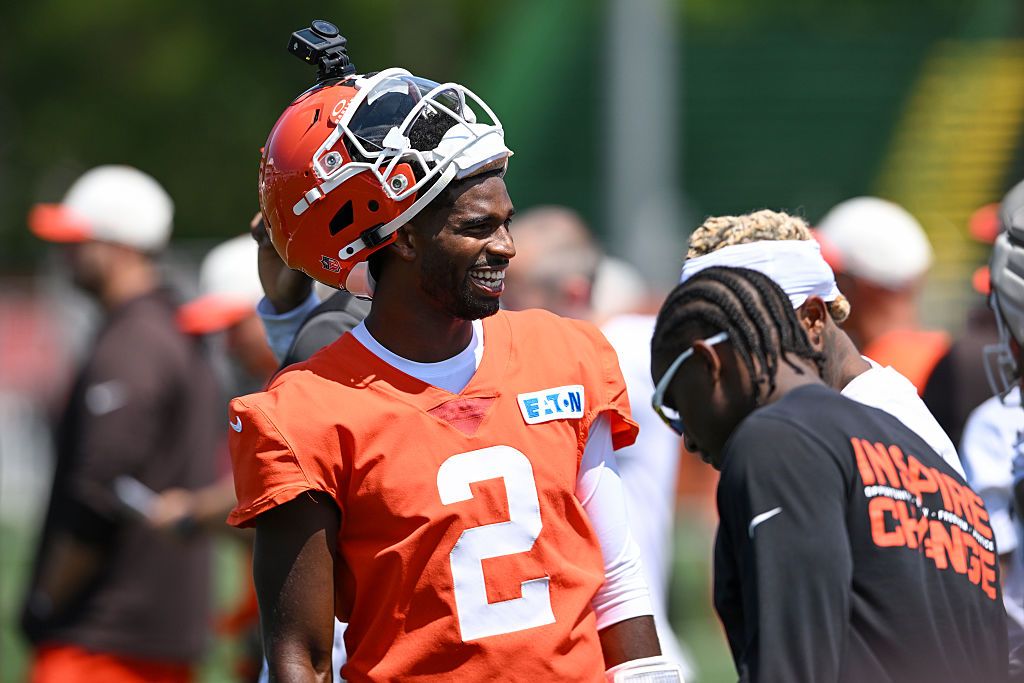
Shedeur Sanders — Cleveland Browns
HBCU: Jackson State
Before finishing his college career at Colorado, Shedeur Sanders spent two dominant seasons at Jackson State. He led the Tigers to consecutive SWAC championships, won the Jerry Rice Award and twice earned SWAC Offensive Player of the Year honors before entering the NFL. Sanders is now competing with Deshaun Watson for Cleveland’s starting quarterback job entering his second professional season.
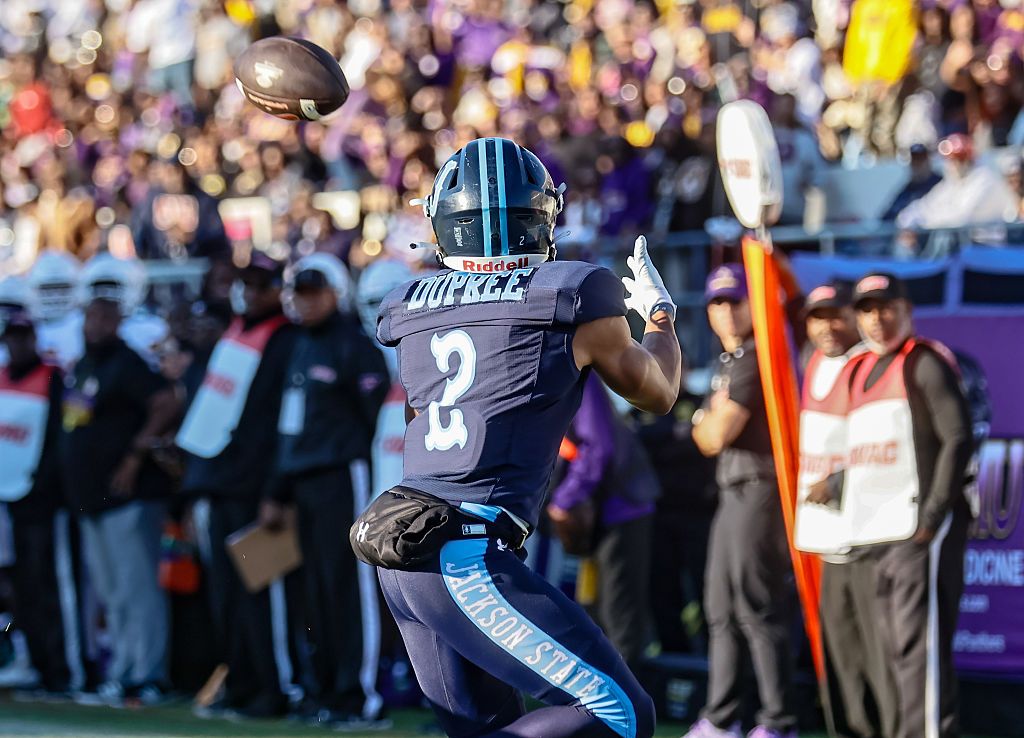
Ja’Naylon Dupree — Free Agent
HBCU: Jackson State
Source: Jackson State University / Getty
Ja’Naylon Dupree was initially reported as an undrafted free agent addition by the Cleveland Browns following the 2026 NFL Draft, but he never officially signed with the team. The speedy former Jackson State receiver remains a free agent after finishing his final college season with 31 receptions for 510 yards and six touchdowns.
Markquese Bell — Dallas Cowboys
HBCU: Florida A&M
Markquese Bell has become one of the more established recent HBCU success stories. The former Florida A&M standout entered the league undrafted but used his versatility to earn snaps at safety, linebacker and on special teams for Dallas.
James Houston IV — Dallas Cowboys
HBCU: Jackson State
James Houston transferred from Florida to Jackson State and immediately became one of the most disruptive defenders in HBCU football. After recording 16.5 sacks during his final college season, Houston began his NFL career with Detroit and later joined Dallas, where he continues to provide pass-rush depth.
Erick Hunter — Detroit Lions
HBCU: Morgan State
Erick Hunter signed with Detroit as an undrafted rookie in May 2026 after five seasons at Morgan State. The linebacker finished his college career with 298 tackles, 35 tackles for loss and seven forced fumbles, ranking second in school history in total tackles.
Emanuel Wilson — Seattle Seahawks
HBCUs: Johnson C. Smith and Fort Valley State
Emanuel Wilson played at both Johnson C. Smith and Fort Valley State before fighting his way into the NFL as an undrafted free agent. He spent his first three seasons with Green Bay, earning offensive snaps through his physical running style, and is now a Seahawk.
Tytus Howard — Houston Texans
HBCU: Alabama State
Tytus Howard is one of the longest tenured HBCU products currently in the league. Houston selected the former Alabama State tackle in the first round of the 2019 draft, and his ability to play tackle and guard made him an important piece of the Texans’ offensive line before he was traded to the Cleveland Browns this offseason.
Grover Stewart — Indianapolis Colts
HBCU: Albany State
Grover Stewart developed from a fourth-round pick out of Division II Albany State into one of the NFL’s most dependable interior run defenders. The veteran defensive tackle has built a lengthy career in Indianapolis through his strength, durability and ability to occupy multiple blockers.
Travis Hunter — Jacksonville Jaguars
HBCU: Jackson State
Travis Hunter began his college career at Jackson State as the highest-rated recruit ever to commit to an HBCU program. He later followed Deion Sanders to Colorado, won the Heisman Trophy and became the second overall pick in the 2025 NFL Draft. Although most of his college accolades came at Colorado, his two seasons at Jackson State remain an important part of his story.
Bhayshul Tuten — Jacksonville Jaguars
HBCU: North Carolina A&T
Bhayshul Tuten began his college career at North Carolina A&T before transferring to Virginia Tech. Jacksonville selected the speedy running back in the fourth round of the 2025 draft, and he quickly showed enough explosiveness to earn a role in the Jaguars’ backfield.
J’Mari Taylor — Jacksonville Jaguars
HBCU: North Carolina Central
J’Mari Taylor starred at North Carolina Central before finishing his college career at Virginia. Jacksonville signed him as an undrafted free agent in 2026, giving the physical running back an opportunity to earn a job through rushing, receiving and special teams work.
Bryan Cook — Cincinnati Bengals
HBCU: Howard
Bryan Cook began his college career at Howard before transferring to Cincinnati and becoming a second-round draft pick in the 2022 NFL Draft. After winning two Super Bowls during four seasons with Kansas City, the safety signed with Cincinnati and is expected to bring experience and leadership to the Bengals’ secondary.
Joshua Williams — Tennessee Titans
HBCU: Fayetteville State
Joshua Williams went from Division II Fayetteville State to becoming a fourth-round pick and immediate contributor for Kansas City. The lengthy cornerback recorded an interception during the Chiefs’ run to Super Bowl LVII and has remained part of their secondary and special teams units.
Cobie Durant — Dallas Cowboys
HBCU: South Carolina State
Cobie Durant was an All-MEAC standout and conference Defensive Player of the Year at South Carolina State. Since being drafted by the Rams in 2022, he has developed into a versatile defensive back capable of lining up outside or in the slot.
Xavier Smith — Los Angeles Rams
HBCU: Florida A&M
Xavier Smith went undrafted after an accomplished career at Florida A&M but earned his opportunity through the HBCU Legacy Bowl and a strong showing with the Rams. His quickness and return ability helped him carve out a place on Los Angeles’ roster as a receiver and special team weapon.
Kion Smith — San Francisco 49ers
HBCU: Fayetteville State
Kion Smith entered the NFL as an undrafted free agent after playing at Fayetteville State. The offensive tackle has remained in the league by continuing to develop as a reserve blocker capable of providing depth at multiple spots.
Javon Hargrave — Green Bay Packers
HBCU: South Carolina State
Javon Hargrave is one of the most accomplished active HBCU products. The former South Carolina State star has earned Pro Bowl recognition, recorded more than 50 career sacks and played in multiple Super Bowls while establishing himself as one of the league’s most dangerous interior pass rushers.
Elijah Williams — Minnesota Vikings
HBCU: Morgan State
Elijah Williams turned a rookie minicamp tryout into a spot on Minnesota’s 53-man roster in 2025. The former Morgan State defensive lineman was one of the biggest HBCU roster stories of that preseason and returns looking to build on his unlikely rise.
Torricelli Simpkins III — New Orleans Saints
HBCU: North Carolina Central
Torricelli Simpkins played at North Carolina Central before transferring to South Carolina. After going undrafted in 2025, the versatile interior offensive lineman made New Orleans’ initial roster and remains a developmental option at guard and center.
Jamie Gillan — Free Agent
HBCU: Arkansas-Pine Bluff
Known throughout the league as the “Scottish Hammer,” Jamie Gillan played at Arkansas-Pine Bluff before entering the NFL as an undrafted free agent. His powerful left leg has helped him build a lengthy career as a punter with Cleveland and New York.
KhaDarel Hodge — San Francisco 49ers
HBCU: Prairie View A&M
KhaDarel Hodge has survived in the NFL through special teams excellence, strong blocking and the ability to make timely catches. The Prairie View A&M product earned Pro Bowl recognition as a special teamer and joined San Francisco in August after several seasons with Atlanta.
Trent Scott — Washington Commanders
HBCU: Grambling State
Trent Scott entered the league undrafted after playing at Grambling State and has since developed into a reliable veteran reserve. His ability to play multiple offensive line positions has allowed him to remain in the NFL across stops with the Chargers, Panthers, Steelers and Commanders.
Jacory “Bill” Croskey-Merritt — Washington Commanders
HBCU: Alabama State
Before transferring to Arizona, Jacory Croskey-Merritt rushed for more than 1,100 yards and 13 touchdowns during his one season at Alabama State. Washington selected him in the seventh round in 2025, and his physical, decisive running style quickly helped him earn opportunities in the Commanders’ backfield.
The number of HBCU Products in the league remains much smaller than it was during previous generations, but their impact cannot be judged by roster totals alone. From first-round investments and starting linemen to undrafted special teams standouts, these players continue extending a football tradition built by Payton, Rice, McNair, Strahan, Williams and numerous other legends.
Their journeys also reinforce why events such as the HBCU Combine and HBCU Legacy Bowl remain important. The talent is still there. The challenge is making sure those players receive enough opportunities to be evaluated, invited into NFL buildings and allowed to prove it.