Coco Gauff Doesn’t Owe Us Grace In Private After Racket Smashing
Coco Gauff’s Racket-Smashing Proves She Doesn’t Owe Us Grace In Private - Page 2
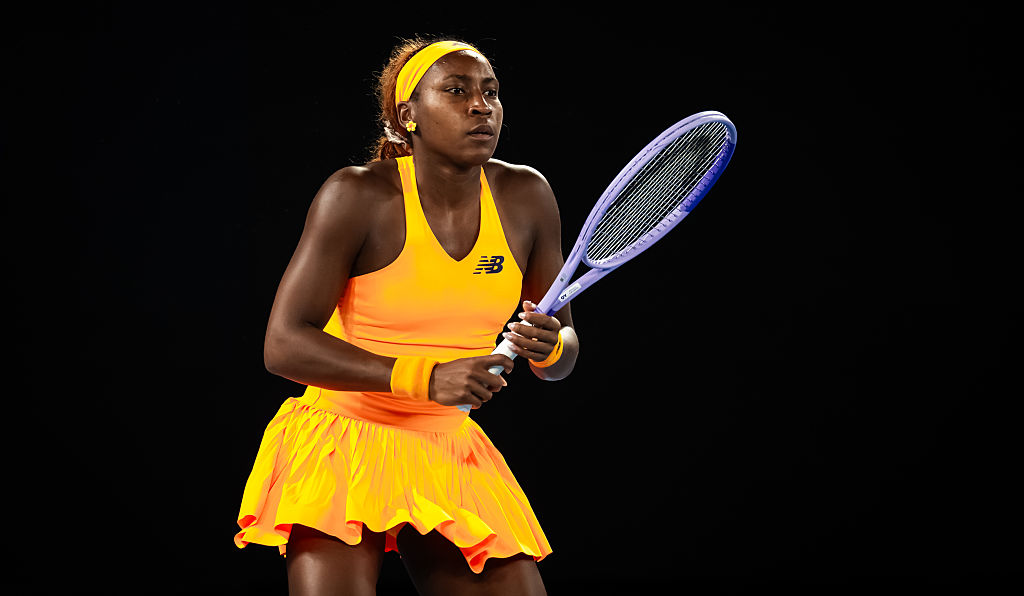
We don’t own professional athletes. We don’t even get to rent them.
At best, they are on loan to us, just long enough for us to witness their superhuman abilities, and once their performance is over, they get to go back to being full-functioning, reactionary, emoting human beings.
And we need to respect that.
On Tuesday, tennis superstar Coco Gauff was defeated by Elina Svitolina in the quarterfinals of the 2026 Australian Open. It was a match that many believed Gauff would win, but she got thrashed in straight sets, 6-1,6-2.
Then, somewhere away from the center court, away from the microphones, away from the curated postgame quotes, a camera caught her smashing a racket near a locker room. Not in front of kids in the stands. Not during a handshake. Not in some performative tantrum meant for the highlight reels. Behind the scenes. In private. Or as private as anything can be when you’re one of the most recognizable athletes on the planet.
The camera didn’t need to capture that scene. She was finished being her public self. She’d lost the match and was returning to her locker room to shower and think about how badly she just played. She was far enough away from the media in which she probably believed that she could get it all out, and within minutes of a human moment from a vulnerable star, the racket-breaking rage was all over social media being shared and gawked at.
And suddenly the conversation wasn’t about tennis anymore. It was about composure. About role modeling. About “what message does this send?” As if one cracked racket threatens the moral fabric of the sport.
“Are we tennis players, or are we animals in the zoo where they are observed even when they poop?” That’s how tennis player Iga Świątek put it after Gauff’s clip went viral—using stark imagery to highlight how athletes are monitored even in moments they assume are private. Świątek’s point wasn’t theater, it was a plea: yes, we perform on court, but we also deserve spaces where we aren’t constantly under surveillance.
Gauff’s moment was a private emotional release, captured only because the infrastructure of modern sports broadcasting feels entitled to every second of a player’s life. When Gauff was ready to face the cameras, she noted that despite her best efforts, her frustration was still captured and shared.
“I tried to go somewhere where there were no cameras,” Gauff told reporters. “I kind of have a thing with the broadcast. I feel like certain moments – the same thing happened to Aryna [Sabalenka] after I played her in the final of the U.S. Open – I feel like they don’t need to broadcast.”
Gauff beat world No. 1 Sabalenka at the 2023 U.S. Open, and footage of her smashing a racket in a training room was also caught on camera and went viral.
“I tried to go somewhere where they wouldn’t broadcast it, but obviously they did. Maybe some conversations can be had, because I feel like at this tournament the only private place we have is the locker room,” Gauff added.
I blame the Kardashians and all of those who watch the spectacle of regularness televised for entertainment. I blame social media for turning regular routines into GRWM moments. I blame suspended reality that allows us to forget that the “busy mom” who wants to show us a full day in her life had to set up a camera and press record to show her waking up in the morning.
I blame us for being insatiable consumers of behind-the-scenes moments that used to be personal. That camera person was back there for just that one moment, and I bet dollars to donuts they were pleased with what they caught. Because somewhere between scripted dramas and scripted faux reality shows that never seem to capture the 14 hours of makeup and wardrobe selection, we lost the plot.
Breaking a racket is not a moral failure. It’s not a scandal. It’s a pressure valve. And we didn’t need to see it. It was a cheap shot for an athlete who, for once, didn’t want to take someone else’s moment and make it about herself. Gauff lost in devastating fashion and she wasn’t happy with herself. But she still held her composure until she got away from the cameras (she thought) and let it out.
And everyone who shared that image is in on it. For once, social media all appeared to be on the right side of history with many arguing for privacy that only privacy affords. Tennis legend Serena Williams even joked that she’d show Gauff how to break her racket with one hit “Serena style.”
And if there is any good to come from this it’s the discussion that’s ongoing about the need for athlete’s privacy because athletes don’t owe us perfection in private. They don’t owe us saintliness. They don’t owe us emotional repression just because their talent is public property.
And maybe that’s the uncomfortable truth this moment exposed: we’ve built a sports culture where athletes are never fully offstage. Where even the walk back to the locker room is treated like bonus content. Where broadcasters and fans blur the line between coverage and surveillance.
If we truly love sports—if we claim to respect the people who give us these moments of brilliance—then we have to learn where to look away. We have to understand that privacy isn’t a luxury; it’s a boundary. One that allows athletes to return, day after day, to do extraordinary things in public.
Because athletes don’t owe us perfection when no one is supposed to be watching. They don’t owe us curated pain or pretty losses. They don’t owe us their worst moments just because we’ve decided to turn everything into a spectacle.
Sometimes, the most respectful thing we can do as fans is let the curtain close.


