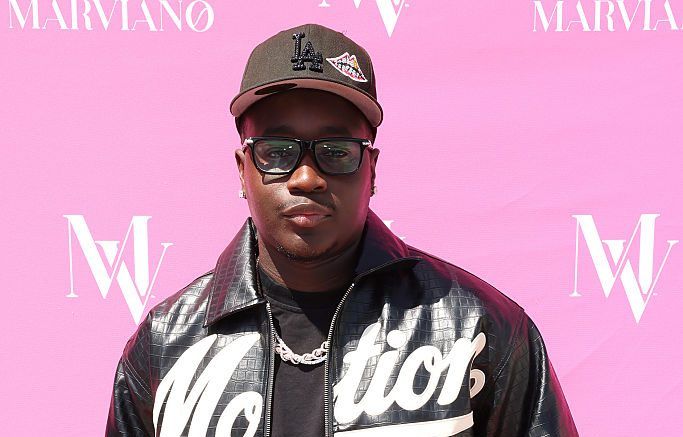
Exec. Director Rasu Jilani On The Impact Of The Brooklyn Art Awards
Executive Director Rasu Jilani On The Impact Of The Brooklyn Arts Awards & Being A Cultural Steward

The Brooklyn Arts Awards was held on May 19, marking its 60th year, featuring the artists, cultural workers, educators, and neighborhood-based organizations embodying the best of Brooklyn through their work. This year’s iteration honors 58 teaching artists and creatives, along with iconic cultural pioneer and former Yo! MTV Raps host Fab 5 Freddy and renowned photographer Laylah Amatullah Barrayn.
At the helm of the Brooklyn Arts Council is Rasu Jilani, a self-described “social sculptor” whose work as an independent curator, community organizer and producer has helped to bolster the artistic community in the borough since becoming Executive Director in 2023.
Cassius was fortunate enough to speak with Jilani on the eve of the Awards about its impact, and what the gala’s theme – “Then, Now, Next” – holds as inspiration moving forward.
Cassius: This year, the Brooklyn Arts Awards marks a major milestone for the Brooklyn Arts Council, being in existence for 60 years. How does it feel being Executive Director at this juncture in time?
Rasu Jilani: It’s a little surreal for so many reasons. I am the first male and the first Black male to have this position as the leader of this institution. This institution has had four leaders over the 60 years. Charlene Victor, who’s the founder. Ella Weiss, who spent greater than 25 years as the president and CEO. And then my predecessor, Charlotte Cohen, and now myself as the first and probably youngest leader to run this organization. It is surreal, because I’ve previously had a relationship with the Brooklyn Arts Council as a panelist reviewing applications, as a teaching artist, and as a professional development facilitator.
And as an advisor later on in my career, I was part of the advisory group, in which I was reintroduced to the institution. So now to lead it is a little surreal. Because my work as a curator and a social sculptor, which is a cultural steward, is always looking at opportunities to support artists, connect artists with opportunities, to create a platform for artists and culture.
I’m full of gratitude and appreciation. But also sometimes I’m pinching myself like, ‘I get to do this with my life? I get to do this every day?’ So it’s one of those situations where you’re kind of living in your purpose.
You mentioned being a social sculptor, and I wanted to know a little bit more about that perspective that you have and how it’s guided you on a personal and professional level to this point.
You know, the way I define social sculpting or being a social practitioner – my social practice is particularly being a social sculptor, which is using my curatorial skills, my organizing skills, my producing skills to bring people together for a common cause. It’s a different form of activism meets art.
So, in ways that our heroes like Martin Luther King, Malcolm X, or Shirley Chisholm would organize from a political standpoint, I’m doing this from a cultural standpoint. For me, it’s really about bringing people together to have those difficult conversations through art. Art lightens the load.
Whether we’re talking about gentrification in Bed-Stuy, or we’re talking about cultural clashes throughout New York, or we’re talking about police brutality, whether we’re talking about economic justice, social sculpting allows me to create cultural moments where we can have enriched conversations in ways that we can see each other’s humanity. And that is the sculpting of social moments so folks can see themselves in the subject matter rather than divorce themselves from the subject matter, which we often see in comments online. But if you’re facing someone eye-to-eye around a subject matter, and you hear the nuance of their perspective, you’re not gonna be so vitriolic towards them. You’re gonna have a little more empathy towards their perspective, even if you disagree.
And so my whole career has been mired with thinking about, ‘How do I put people in a room who have different perspectives in order to advance a critical conversation forward?’ So that’s kind of the background, whether that’s in Afropunk, whether that’s in my work at New Museum through New Inc. Whether that’s my work at MAP International or Laundromat Project, or me as an artist, even more recently with my social practice work, Men At Work Healing, these are the conversations that we’re doing. We’re really thinking about, even in Men At Work Healing, for example, the transformation of masculinity. Like, how can we step that up?
And I won’t go down that corridor for too long, but I’m just giving you an example of how to illustrate social sculpting as a practice. Now, me as a president and executive director, I have to do that with my staff. We do that in the way that we curate our teaching artists from year to year, and the teaching artists that are in schools and older adult centers and communities throughout Brooklyn. It’s also in thinking about the panelists that we put in the room to review applications of their peers. And in this year, we’re proud to give 222 grants or awards to artists throughout Brooklyn, artists and art organizations.
Can you share a little bit of the process behind the selection of this year’s cohort and how the awardees exemplify the “Then, Now, Next” theme of the awards?
So I want to make sure I’m making a distinction between the awardees, the folks that get money from us every year, 222 artists that are getting grant awards from us, along with the 58 teaching artists, in schools and older adult centers. Those particular awardees are our “next” in our “then, now, next” framework.
Those are the future Spike Lees, the future Danny DeVitos, the future Suzan-Lori Parks, the future Laurie Cumbo, who was our recent commissioner of arts for New York City. She was once a grantee. Those people I’ve named just now are former grantees of the Brooklyn Arts Council. We know them as cultural stewards, but at one point, they were the future of their time. So these awardees that we’re giving grants to this year are the future of Brooklyn Arts.
The “now” is the honoring of Laylah Amatullah Barryn, who is a five-time awardee in the past, gotten five different grants from our organization, and at that time she was crafting the aperture of her practice as a photographer and as a curator. But now, she has shot for National Geographic and the New York Times and multiple platforms and curated visual art shows and photography shows all around the world, including Africa. She’s that emerging artist that represents now.
And then the past, or the “then,” is who we all know as Fab 5 Freddy, right? Whereas a youngster watching Yo! MTV Raps to really get a sense of the culture that I walked among out in the streets…to see it framed through a curatorial lens, through a commentator who was giving us context of why Wu-Tang was important, why LL Cool J was the GOAT, you know? Why it was important to listen to the street poetry of Tupac, why it was important to listen to A Tribe Called Quest ’cause they were reinventing jazz through Hip-Hop. That was Fab 5 Freddy.
I think it’s really important to mention the other honorees, because there are community champion honorees, and that’s Amy Schwarzman and Randi Berry. Randi Berry is the executive director of Indie Space. But Randi and Amy Schwarzman represent the Safety Net Coalition, and this ties back into the work I was talking about with the commissioner.
The Safety Net Coalition was formed during COVID to create, amongst a bunch of institutions, including philanthropic institutions, service-based institutions, and arts administrators, to come together to say, ‘How do we support the arts when there’s a crisis?’
And then the Red Hook fire happened in September 2025. And they reached out to Brooklyn Arts Council to say, ‘Hey, as a member of the Safety Net Coalition, what would you like to do, and how can we support it?’ So myself, Amy, and Randi put our heads together and came up with a mechanism to create an emergency response grant for the artists and the art organizations that were impacted by that Red Hook fire. There are upwards of 120 artists, artist studios, artist collectives, and artist businesses that have just lost everything.
So what we were able to do is raise $600,000 in pretty much, like, a month. And we were able to disseminate an emergency grant to 75 artists and art organizations through that grant. I’m very proud of that work because what it showed was one, response to a moment. Two, the ability for us to collaborate and come together through our collective imagination of how can we resolve an issue and do it swiftly. And three, to build a system that wasn’t already in place in order to respond to a moment. And that’s why we’re honoring Randi and Amy, because they were my comrades in imagining what this would look like for us.
We’ve spoken about Laurie Cumbo. She’s now the outgoing Commissioner of Cultural Arts for City of New York, and we have a mayoral administration in place now that seems more amenable to listening to the people’s needs, meeting them where they’re at. How do you envision more of the collaborative communication between Brooklyn Arts Council and the incoming Commissioner for Cultural Arts with this mayoral administration?
That’s a great question. I’m so happy you asked this question, and I truly mean that. First of all, Laurie Cumbo was not only our former commissioner, but she is also our friend, and she was an outstanding commissioner. I think she wore her commissioner’s hat differently from other previous commissioners. You know, before she was a commissioner, she was an elected official, so she brought that political standpoint to her commissioner-ship to bring awareness to the arts in a way that previous commissioners did not. But not every new commissioner is gonna be a politician, right?
And Laurie Cumbo gave, not just me, but the other arts councils, LMCC, the Lower Manhattan Cultural Council, Staten Island Arts, the Bronx Council on the Arts, and the New York Foundation of the Arts, a seat at the table for us to discuss what it looks like for all of us to work together for a greater New York. Now, the new commissioner, Diya Vij, is also a friend and a tremendous curator and a tremendous artist. So this is the first time we actually have an artist and a curator as a commissioner. That’s a different proposition because what that does is put a cultural steward like Laurie Cumbo, but in a different way, in the seat of the commissionership.
And the reason why people come to New York is because it’s the most creative city on the planet, and Brooklyn in my estimation, is the most creative borough in the city. We are losing artists by the droves because they cannot afford to practice here. It’s just too expensive. So we have to really reimagine how we’re gonna support artists moving forward. And I think that’s the work that we’re really committed to collectively, all of the arts councils, as well as the commissioner, to make sure that there’s room for artists to be citizens like everybody else.